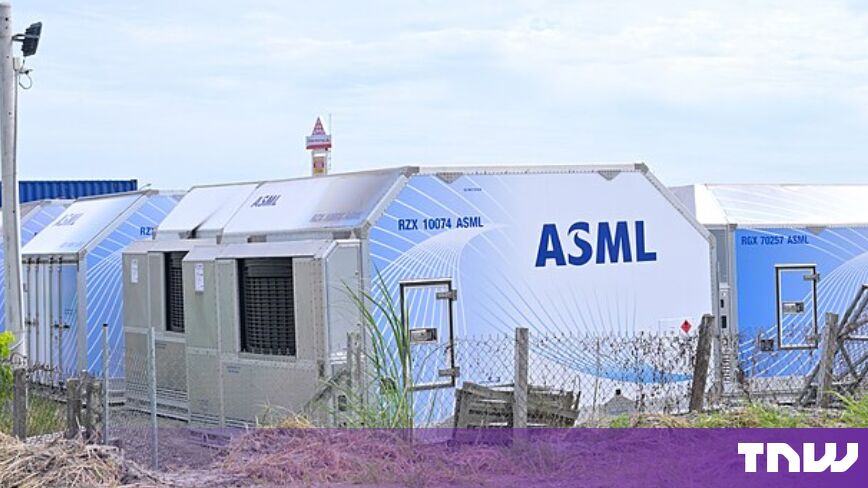
Bank of America lowered BE Semiconductor Industries to neutral and nearly halved its price target, citing ASML’s interest in hybrid bonding. The change matters because the technology is central to the company’s growth case. ASML has said publicly it is examining the same technology, but the source does not report a confirmed market entry.
What changed in Bank of America’s view?
The bank said BE Semiconductor Industries’ share price did not reflect the risk that ASML might enter the market. Its analysts said that uncertainty could remain a drag until ASML’s plans were clearer. They were not assuming ASML would take significant market share. The available source does not provide either price target figure, so the size of the reduction cannot be stated precisely.
The report also describes a difficult production challenge behind the opportunity. Manufacturers struggle to make working chips consistently at the precision needed to stack logic or memory, according to Bank of America. Hybrid bonding joins chip surfaces directly, without metal bumps in between, and moves heat out better. BE Semiconductor Industries makes machines for that bonding process.
What is hybrid bonding and why does it matter?
Hybrid bonding is a way to connect two chip surfaces directly. In the description provided, it does not use metal bumps between the surfaces. The process can improve heat movement, while the accuracy needed to stack logic or memory is difficult for manufacturers to achieve consistently. These details explain why the equipment market is important to BE Semiconductor Industries.
The company told investors in August that it could ship more than 2,000 tools by 2030 in an optimistic scenario. Its 2025 annual report recorded cumulative orders above 150. Bernstein expects BE Semiconductor Industries to account for three of every four hybrid bonders shipped in 2028, the report says. The company’s figure is an ambition under an optimistic case, while Bernstein’s number is an expectation.
What has ASML said about entering the market?
ASML has publicly said it is looking at the same technology, according to the source. It shipped its first advanced packaging product last year, and chief executive Christophe Fouquet said in April that the company continued to consider ways to support customers in hybrid bonding. Neither fact establishes that ASML has decided to manufacture or sell competing hybrid bonding equipment.
Bank of America’s analysts focused on the uncertainty of ASML’s plans rather than forecasting a particular market share. The report says the company could remain an overhang on BE Semiconductor Industries until those plans are clearer. It also gives no timetable for a decision by ASML. The account notes that neither company responded immediately to requests for comment.
Why are ownership questions also in focus?
The report says Lam Research and Applied Materials approached BE Semiconductor Industries, which hired Morgan Stanley. Discussions reportedly started in mid-2025, paused amid tensions between Washington and Brussels, and resumed later. The source does not confirm a bid or disclose proposed terms. BE Semiconductor Industries said in March that it was committed to staying independent.
Applied Materials has held 9% of the company since April 2025. Any bid would require clearance in The Hague under an investment screening law that has included semiconductors since 2023. The source also says six more technologies come within the law in January. That describes a potential review requirement; it does not report that a transaction has reached that stage.
What do the share figures show?
The shares fell as much as 6.4% on Tuesday, and the report says they were the worst performer in the Stoxx 600 last quarter. They had fallen about 40% from a June peak but remained up 45% this year. The account supplies no exact date for Tuesday, so it cannot be matched to a calendar date from the provided information. The different figures refer to separate measurement periods.
The next developments to watch are clearer information about ASML’s intentions and any formal progress on the reported approaches. A takeover proposal, if made, would face the stated clearance requirement in The Hague. For now, the account records a rating change, a possible competitive threat and the company’s stated preference to remain independent.