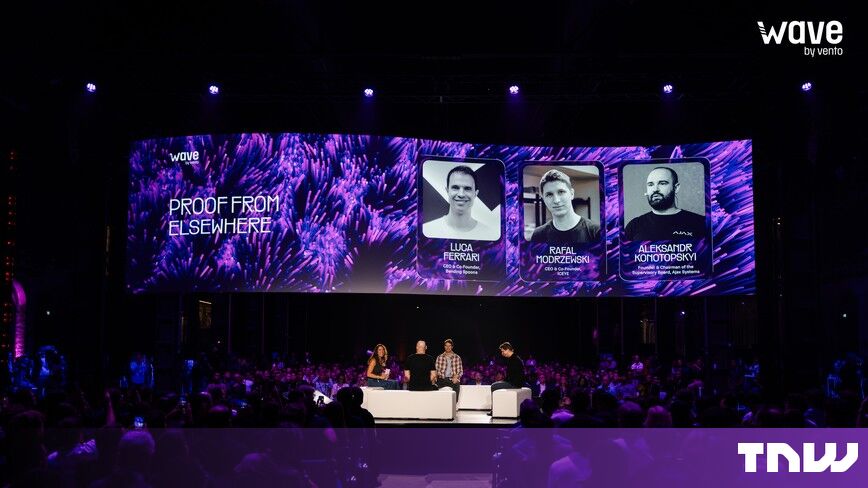
Wednesday’s update: Luca Ferrari said strong European companies can raise substantial capital in Europe, and he argued that funding is no longer the main obstacle for founders. He spoke at Wave by Vento in Turin on a panel called Proof from Elsewhere. The discussion followed the choices of three founders who were advised to move to Silicon Valley but stayed in Europe.
What did Ferrari say founders can raise?
Ferrari said founders with a strong project, credibility and persistence can secure as much money in Europe as in almost any other place. He suggested that a founder who blames a lack of funding may need to consider weaknesses in the idea or execution. He also said persistence matters to the effort of raising capital. These are Ferrari’s views from the panel, rather than disclosed financing terms for Bending Spoons.
Why did Bending Spoons choose Milan?
Ferrari said Bending Spoons compared many cities before selecting Milan. He named access to talented people and less competition for hiring as reasons for the choice. The company has since opened an office in Warsaw. Ferrari said some people might otherwise have needed to emigrate to find interesting work, although they would prefer to remain where they are.
What did the other founders say about location?
Rafal Modrzewski, co-founder and chief executive of ICEYE, said the company competes less for engineers than it would in the Bay Area. He reported receiving calls from people in Seattle and California who wanted to move back to Europe. Aleksandr Konotopskyi, founder of Ajax Systems and chair of its supervisory board, said the company builds teams in other countries for efficiency. Its engineering stayed in Ukraine through the full-scale war, and the company has customers in 130 countries.
What challenges did the panel identify?
Konotopskyi pointed to regulation and taxes when asked why the EU was losing ground to the US and China in technology. He also said governments should be more positive towards entrepreneurs. The comments identify his explanation, not a panel-wide finding about the causes of the technology gap. The speakers’ accounts also show how hiring conditions can differ between European locations and the Bay Area.
How did the discussion put capital in context?
Linda Rottenberg, co-founder and chief executive of Endeavor, said that when the organisation began in 1997, venture capital was almost absent outside the US. She said Endeavor now works in 50 countries and has selected more than 3,100 entrepreneurs. Their companies generate over $100bn in revenue, and the network’s venture arm closed a $320M fund on Wednesday, according to Rottenberg.
Modrzewski said Europe has more capital now, but competition has increased and founders need to raise more. He said fast-growing companies need funds in the bank to handle mistakes. Konotopskyi warned founders against focusing too heavily on fundraising and instead emphasised the quality of the product. Together, these views describe capital as one part of company building, alongside execution and operational decisions.
The panel does not disclose a specific financing round, amount or investor for Bending Spoons. It also does not quantify how much capital is available to European founders across sectors or countries. Ferrari’s claim is a broad assessment based on his experience, while the other speakers described their own companies and organisations. Any wider comparison would require evidence beyond the panel accounts.