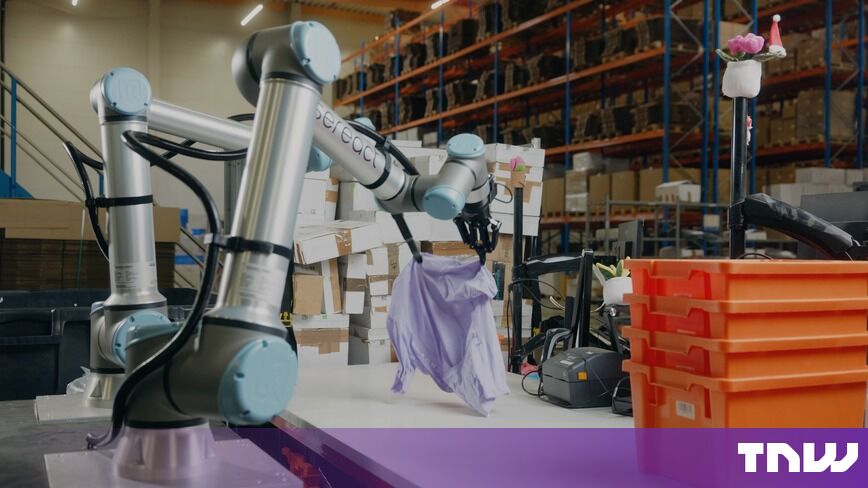
Sereact’s two-armed robots are sorting returns at two CEVA Logistics sites in Germany and Poland, the companies said. The live operations handle Zalando fashion returns at Greven and Świebodzin. The deployments are described as the first step in a plan to automate returns across Europe.
How did the project reach live operations?
The three companies said the robots began working in live operations at CEVA Logistics sites in Greven, Germany, and Świebodzin, Poland. The sites handle Zalando’s fashion returns, bringing the retailer’s goods together with Sereact’s robotic systems and CEVA’s logistics operations. The companies have framed these installations as the start of a broader European plan, rather than a completed network-wide rollout.
Zalando joined Sereact’s Series B round as a strategic investor in July, according to the source account. That means Zalando participated as an investor while also becoming a customer whose returns are being sorted by the robots. The reported funding figure for Sereact’s Series B is $116m, although the source does not detail the terms of Zalando’s investment. Sereact was founded in Stuttgart by Ralf Gulde and Marc Tuscher.
What makes clothing returns difficult to sort?
Returned clothes may arrive crumpled or poorly packed, so their appearance and shape can vary from item to item. A robot programmed around familiar products can struggle when an object does not match the examples or instructions it already has. That variability makes returns a demanding setting for machines expected to grasp and sort items reliably.
Sereact’s software, called Cortex, enables the robots to grasp, identify and sort items they have not encountered before, the companies said. The claim is that the systems do not need product-specific training or a fixed catalogue of articles to process returns. In plain terms, the system is intended to handle unfamiliar items without first being taught each individual product. Ralf Gulde described returns as a particularly difficult manipulation problem for fashion logistics.
Who handles the work at each site?
CEVA Logistics provides the logistics sites where the systems operate, while Sereact supplies the robots and Cortex software. Zalando is the retailer whose fashion returns are being processed. The source describes the arrangement as robotics-as-a-service, meaning the robots are paid for as a service rather than simply described as a one-off equipment purchase.
The companies say the machines take on repetitive handling and reduce physical strain on workers. Staff are expected to supervise stations, manage exceptions and check quality, according to the source account. Chris Walton, CEVA’s senior vice president for contract logistics, said the service model sorts items faster and with fewer manual steps. The source does not provide measured performance figures for speed, staffing or error rates.
What remains to be established?
The companies have not provided a timetable or site count for the planned expansion across Europe. Nor does the available account state how many robots are operating at either site or how many returns they process. The next concrete evidence will be whether the companies announce additional deployments or publish operating measures from Greven and Świebodzin.
The source also mentions Zalando’s planned closure of a logistics centre in Erfurt by September, with the works council putting affected workers at more than 3,000. That reporting did not link the closure to automation, so the two developments should not be treated as connected. For this deployment, the companies’ stated workforce effect is a shift towards supervision, exception handling and quality checks. Details on how those roles change in practice remain undisclosed.