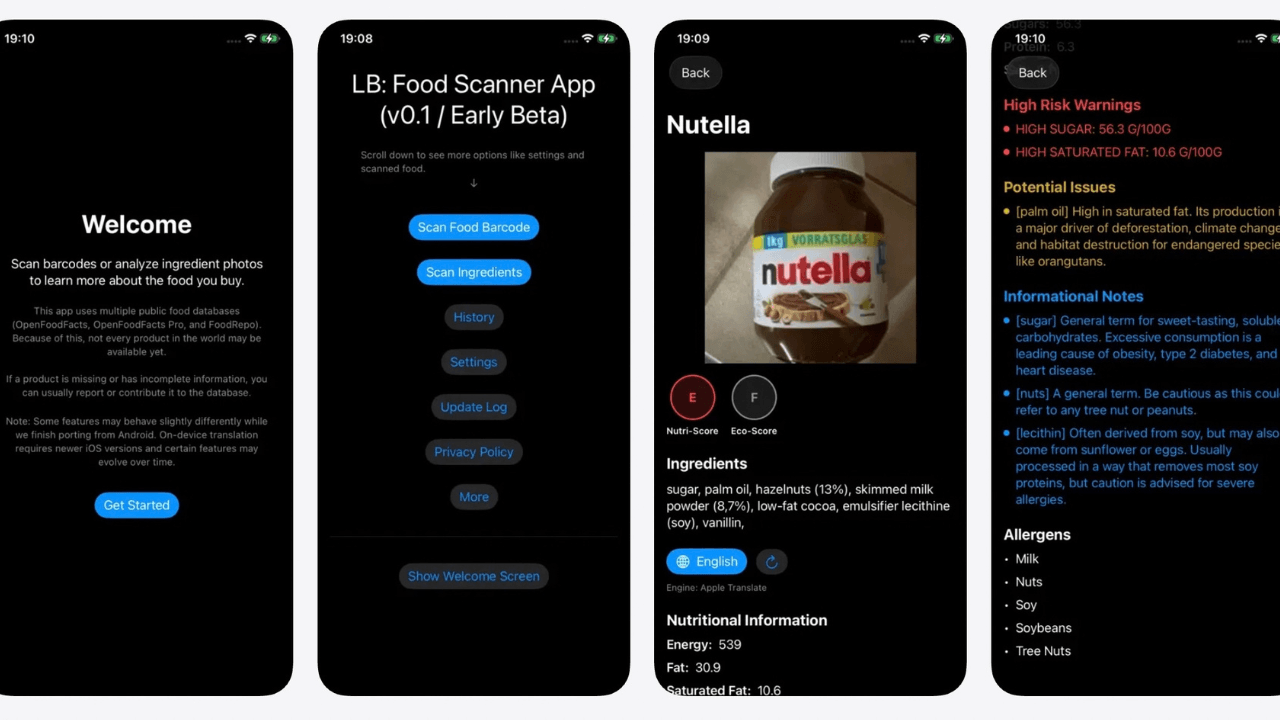
LB: Universal Scanner lets users scan a barcode or photograph an ingredient list to get an explanation of a product’s contents. Founded by 19-year-old Bálint László, the app is available on Android and iOS. Its development began with food and broadened to other categories as its founders encountered more product labels they found difficult to interpret.
How did the app begin?
The idea first came from Mónika, Bálint’s mother, after a conversation with her friend Tünde. Tünde wanted an app that could identify food ingredients that might harm her. Mónika had her own food sensitivities and understood why such a tool could be useful. Their initial focus was therefore food products.
Mónika then noticed a similar problem while reading the ingredients on shower gel. She questioned why an ingredient scanner should be limited to food, and wanted to understand the contents of pet food as well. Food was subsequently joined by pet food, cosmetics, cleaning products, and art and craft supplies. The expansion followed the same practical concern: product information can be difficult to understand or verify.
What does a scan tell users?
The app offers two ways to start: scan a product barcode or photograph an ingredient or safety label. The stated purpose is to explain what is in a product, rather than simply identify its name. A photograph can be used when a barcode is not recognised. The available description does not specify how each explanation is produced or how users should assess its certainty.
Its coverage includes food, pet food, cosmetics, cleaning products, household supplies, and art and craft supplies. That range puts the product information itself at the centre of the experience, across items used in different parts of daily life. The app is described as privacy-focused, with usefulness, accessibility, privacy, and responsible information identified as priorities. Further detail about data handling is not included in the source material.
What is known about its development?
Bálint was born in Hungary and has lived in Germany since he was five. He is autistic and has said that he tends to focus on how things work, whether a logical solution exists, and whether a process can be more efficient. The account says he prefers written communication to spoken conversation. That preference shaped how he and Mónika shared their experiences about the app.
The product is described as a consumer app built with limited resources, and its two listed platforms are Android and iOS. The source does not give a funding amount, investor details, user totals, or a launch date. It also does not identify a company structure or provide commercial performance figures. Those omissions leave the available account focused on the product’s purpose and origins rather than its business scale.
What remains unclear about the scanner?
The account says barcode scans search supported public product information, but it does not name the sources or explain their coverage. It does not state how often listings are updated, what happens when information is missing, or how ingredient explanations are checked. It also does not describe what personal information, if any, is collected during a scan. Those details would help readers understand both the privacy focus and the limits of the information provided.
For founders and technology professionals, the example shows a product idea emerging from a specific user need and extending to adjacent label-reading problems. The reported next step for readers is to examine the app’s own explanations and privacy information when using it. The source offers no further product roadmap or company plans. Whether the scanner’s coverage and verification approach will be documented in more detail remains open.