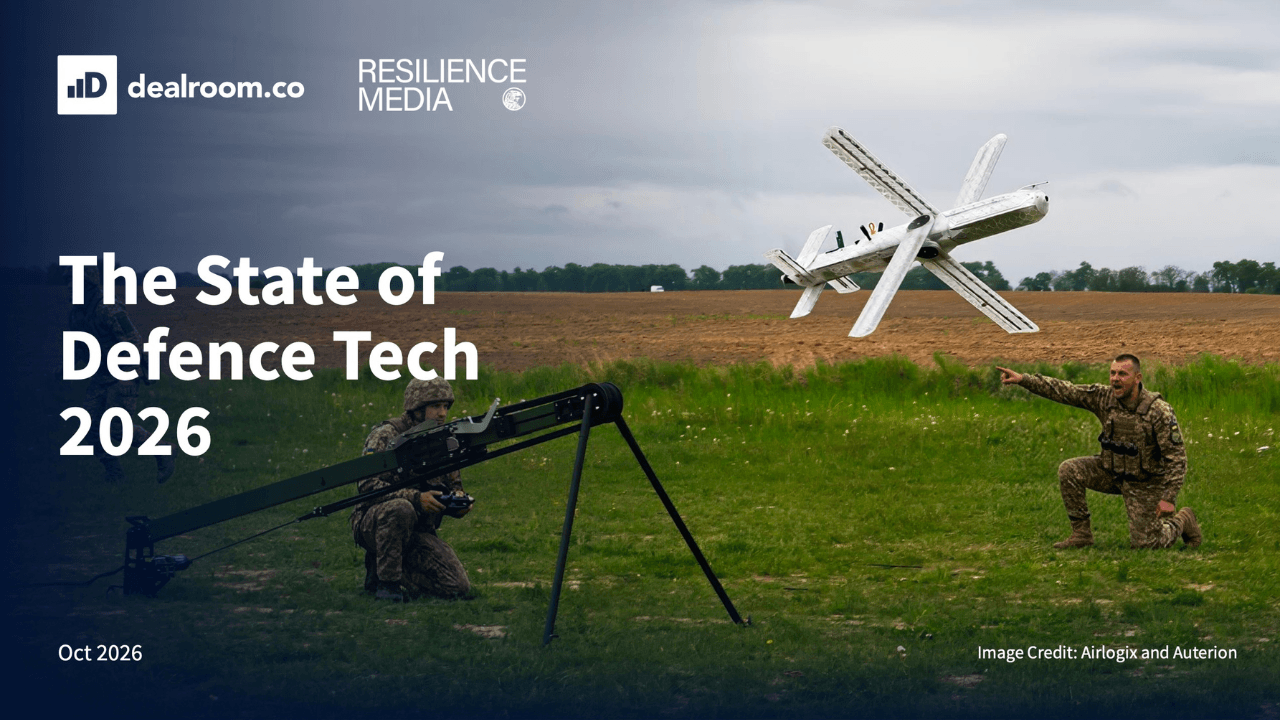
European defence tech startups have raised $7.4 billion in 2026 to date, nearly three times the $2.6 billion recorded in 2025. The figures come from Dealroom and Resilience Media, which track investment across the sector. Mega-rounds account for more than 85 per cent of this year's European funding, while the sector represents 11.1 per cent of European VC investment.
How did investment reach this level?
The current total follows $2.6 billion raised in 2025, according to Dealroom and Resilience Media. The available figures describe the change across those years but do not identify the individual transactions behind the full $7.4 billion total. The report says seven rounds of at least $1 billion contributed to the concentration in mega-rounds. It names Anduril, Helsing, Saronic, Shield AI, Quantum Systems, ICEYE and Castelion among those rounds.
The funding share gives another way to understand the sector's position in the market. Defence tech accounts for 11.1 per cent of European VC investment and 15 per cent within the EU27, according to the report. These percentages refer to venture capital investment, rather than every form of financing available to defence companies. The report describes defence tech as Europe's fastest-growing major venture capital segment.
What does the funding mix show?
A mega-round is a very large financing round; here, the report identifies seven rounds valued at $1 billion or more. Their role means the headline total is concentrated among a small number of large investments. The report says mega-rounds represent more than 85 per cent of this year's European defence funding. It also reports growth further down the financing ladder, with $15 million to $100 million breakout-stage funding doubling against 2025 and reaching a record level.
Early-stage investment presents a different pattern from those breakout rounds. Dealroom and Resilience Media project that early-stage funding will finish roughly in line with the previous year's record. That is a projection, rather than a final annual result, because the figures cover 2026 to date. The source does not give a separate early-stage amount or identify the specific rounds included in that projection.
Who is joining the investor base?
Dealroom has identified 310 investors participating in at least one European defence deal in 2026 to date. Its projection puts the full-year count at 620, compared with 387 in 2025 and 99 in 2020. An investor count records participation in deals; it does not show how much each participant invested. The available figures also do not name all 310 investors.
Specialist defence funds took part in 34 per cent of European defence rounds in 2025, a share described in the report as nearly twice the previous year's. Other financing sources, including private equity, project finance, debt and grants, supplied a further $2.4 billion to NATO and allied defence companies in 2025. The report says Europe's ten most active defence investors recorded 52 round participations since 2024. NATO Innovation Fund led that group with nine participations, followed by Project A with eight.
What remains open in the report?
The $7.4 billion figure is a year-to-date total, and the material provided does not specify a reporting cut-off within 2026. The source excerpt gives no full breakdown of the European total by investor, company or individual round. Dealroom's projection of 620 investors is not a final count, so the completed annual figure remains unknown. Further detail on round sizes, early-stage funding and the final investor tally would clarify how broad the activity is beyond the largest financings.
The next point to track is whether the projected full-year investor count is reached. The report also projects early-stage investment to finish roughly level with its previous record. Those are forecasts, not confirmed year-end results.